



The 3 kEys
- In many industrial settings, particularly those with nearby manufacturing processes, agriculture, or high vehicular traffic, solar panels accumulate grime more quickly than expected. Regular cleaning schedules—especially during dry seasons—help to maximize light absorption.
- Familiarize yourself with the available analytics to identify patterns in energy generation, detect underperformance, and correlate changes in output with external factors such as weather conditions or shading.
- Shade is not your friend. Even partial shading on a single panel can drastically reduce the output of the entire array, especially in older systems that lack power optimizers or microinverters.
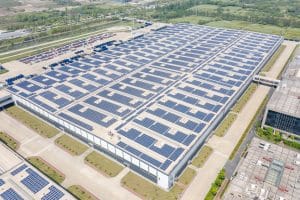
Industrial solar photovoltaic (PV) systems are a powerful asset for facilities looking to control energy costs, reduce their carbon footprint, and enhance operational efficiency. However, even the best solar arrays require ongoing management to ensure they deliver optimal performance.
Facilities Managers play a crucial role in maintaining and enhancing the efficiency of these systems, often with minimal or no capital investment. Through targeted operational improvements, diligent monitoring, and proactive maintenance, Facilities Managers can extract more value from their existing solar installations.
SCC Lighting & Renewables offers a number of stories from their business experience to illustrate some of the strategies below. You can find them here: Case Studies.
Optimizing Panel Cleanliness for Maximum Output
Dust, dirt, bird droppings, and other debris can significantly degrade the performance of a solar array. A thin layer of dirt may seem inconsequential, but it can lead to substantial energy losses over time. In many industrial settings, particularly those with nearby manufacturing processes, agriculture, or high vehicular traffic, solar panels accumulate grime more quickly than expected. Regular cleaning schedules—especially during dry seasons—help to maximize light absorption.
Facilities Managers should monitor the impact of panel soiling using remote data monitoring systems, which can indicate a dip in performance correlated with dirt accumulation. If a professional cleaning service is not in the budget, simple rinsing with deionized water or using soft-bristle brushes can be effective.
Some organizations employ autonomous cleaning robots, which, while an upfront investment, quickly pay for themselves through increased energy yield.
Leveraging Performance Monitoring Systems
Many industrial solar installations come equipped with sophisticated monitoring software that provides real-time and historical performance data. Often, these tools are underutilized due to a lack of training or integration into daily facility operations. Facilities Managers should familiarize themselves with the available analytics to identify patterns in energy generation, detect underperformance, and correlate changes in output with external factors such as weather conditions or shading.
When performance deviations occur, the root cause must be investigated promptly. For example, if a specific string of panels consistently produces less energy, it may indicate an inverter issue, a loose connection, or shading from a newly constructed structure or overgrown vegetation. Understanding the nuances of the monitoring system allows for quick, informed decision-making that can improve solar efficiency without requiring additional hardware.
Page 31 of IARW’s Solar Photovoltaic System Guidelines White Paper speaks to the importance of monitoring your system.
Reducing Shading and Enhancing Sunlight Exposure
Shade is not your friend.
It represents one of the most significant impediments to solar PV efficiency. Even partial shading on a single panel can drastically reduce the output of the entire array, especially in older systems that lack power optimizers or microinverters. Facilities Managers should regularly inspect the site for new sources of shading, including tree growth, rooftop obstructions, or adjacent building modifications.
If shading is unavoidable, small adjustments can yield large improvements. Trimming trees, relocating equipment that casts shadows, or even adjusting the tilt angle of panels during seasonal changes can enhance energy generation. Understanding solar path angles and how they shift throughout the year enables managers to implement site-specific shading mitigation strategies without incurring major expenses.
Success studies from Sustain Commercial Solar can be found here, titled Commercial Solar Case Studies.
Optimizing Inverter Efficiency and Preventing Failures
Inverters are the heart of any solar PV system, converting direct current (DC) electricity from the panels into usable alternating current (AC) power. Over time, inverters can experience efficiency losses due to heat stress, component wear, or firmware inefficiencies. Regularly checking inverter logs for error messages, inefficiencies, or abnormal heat generation can preempt failures and avoid costly downtime.
Cooling plays a crucial role in inverter longevity and efficiency. Keeping inverters shaded and ensuring proper ventilation prevents overheating, which can degrade performance. Where possible, improving airflow or adding passive cooling measures like reflective paint on nearby surfaces can enhance efficiency at no additional cost. Additionally, many manufacturers release firmware updates that can improve performance, so ensuring that inverters are running the latest software can lead to measurable gains.
Enhancing Grid Interaction and Load Management
Facilities with solar PV systems often have opportunities to better synchronize their energy consumption with their solar generation. Demand-side energy management ensures that the highest energy-consuming processes occur when solar output is at its peak, thereby reducing grid dependency and maximizing on-site solar utilization.
For facilities without battery storage, shifting high-energy operations—such as industrial refrigeration, heat-intensive processes, or peak equipment usage—to midday hours helps to harness maximum solar output. Smart energy management systems, which many facilities already possess for HVAC or production line control, can be reprogrammed to optimize energy consumption patterns without additional investment.
Conducting Periodic Inspections and Preventative Maintenance
Many performance issues arise not from major equipment failures but from small, preventable issues such as loose wiring, corroded connections, or damaged panels. Routine inspections, particularly after extreme weather events, allow for the early detection of problems before they escalate.
Infrared thermography, which can be conducted with a relatively low-cost infrared camera, helps identify hot spots on panels that may indicate malfunctioning cells or electrical imbalances. Meanwhile, ensuring that mounting structures remain secure and free from corrosion extends the life of the array and prevents mechanical failures. Even basic visual inspections, conducted systematically, can lead to significant efficiency improvements.
The Big Finish
Facilities Managers are on the front lines of ensuring that industrial solar PV systems perform at their best. By implementing simple yet effective operational strategies—such as maintaining panel cleanliness, leveraging monitoring software, mitigating shading, optimizing inverters, managing grid interaction, and conducting routine inspections—solar efficiency can be improved without the need for major capital expenditures.
Through continuous refinement and proactive management, industrial facilities can extract greater value from their existing solar assets, ensuring long-term financial and environmental benefits. As solar energy continues to play a critical role in industrial energy generation, a well-managed PV system remains a cornerstone of a cost-effective, energy-efficient operation.